Why I use both retinol and tretinoin
I started using retinol in my late twenties for the usual reasons. Fine lines around my eyes that hadn't been there the year before. A slight dullness I couldn't explain... And then, I found retinol.
SKINCARE & BEAUTY
5/18/20264 min read
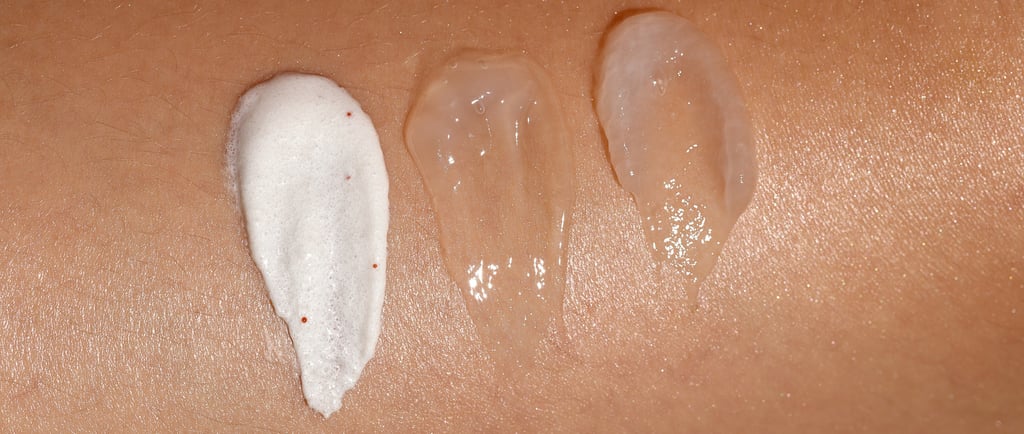
Three years later I added tretinoin. Today I use both. People keep asking why I don't just pick one, so here's the answer, along with the science behind what's happening on my face.
What's actually different about them
Retinol and tretinoin belong to the same family, called retinoids. All retinoids are derivatives of vitamin A, and they all do roughly the same thing in the skin. They speed up cell turnover, stimulate collagen, and unclog pores. The difference comes down to one word, conversion.
Tretinoin (the proper name for what some people call "tretinol") is retinoic acid itself. It walks into your skin and gets to work immediately, no translation needed.
Retinol has to be converted by your skin in two steps before it becomes that same retinoic acid. Every conversion step loses potency. Research puts tretinoin at roughly 10 to 20 times stronger than retinol at equivalent concentrations. So 0.5 percent retinol works out to about 0.025 percent tretinoin in real activity, and 1 percent retinol roughly matches 0.05 percent tretinoin, which happens to be the most commonly prescribed dose.
Why one isn't always better
A split face study published in the Journal of Drugs in Dermatology compared three retinol formulations against three tretinoin formulations on people with moderate to severe photodamage. The retinol side held its own. All formulations significantly reduced wrinkles, pigmentation, and skin roughness. The retinol produced less water loss through the skin, less redness, and less scaling.
In other words, retinol works. It just works more gently, which becomes its biggest advantage on the nights when your skin can't handle the bigger gun.
A Bayesian network meta analysis from 2025 ranked both compounds favorably for aging outcomes. Tretinoin remains the gold standard for collagen synthesis. The famous 1993 New England Journal of Medicine study showed it actually restored type I procollagen formation in photodamaged skin. Retinol stimulates collagen too, and it blocks the enzymes (matrix metalloproteinases) that UV exposure activates to break collagen down in the first place.
So when I use both, I'm not switching between a weak and a strong version of the same thing. I'm rotating two tools that prioritize slightly different jobs.
My actual routine
I alternate nights. Tretinoin one evening, retinol the next. The honest reason is irritation. When I used tretinoin every night, my skin got red and flaky. When I tried to push through it, my barrier eventually fell apart and I broke out worse than before I started. Alternating gave my skin the recovery time it needed without giving up the results.
The structural reason is that tretinoin and retinol work on slightly different timelines. Tretinoin accelerates turnover hard. Retinol does the same job at a quieter pace while giving the skin barrier a chance to rebuild lipids and ceramides between heavier nights. After about four months of alternating, my skin looked smoother than it had on nightly tretinoin alone.
The moisturizing sandwich method
This is the second thing that changed everything for me. The sandwich method means layering moisturizer around your retinoid instead of after it.
There are two versions. The full sandwich means moisturizer, then retinoid, then moisturizer on top. The open sandwich means moisturizer either before or after the retinoid, not both.
I use the open sandwich, and here's why. Research published in Dermatology Times found that full sandwiching (moisturizer on both sides of the retinoid) reduced retinoid bioactivity by roughly threefold. That makes intuitive sense. You're diluting the active and slowing its penetration from both directions. Open sandwiching, by contrast, did not diminish bioactivity at all. You get the buffering effect without losing the results you came for.
My exact steps look like this. I cleanse, then wait until my skin is completely dry. I apply a thin layer of a basic ceramide moisturizer. After about ten minutes I apply a small amount of retinol or tretinoin to my whole face. I don't follow with anything else.
On the nights my skin feels especially raw, I'll do a tiny second layer of moisturizer over the top. That's a full sandwich, and I accept that I'm losing some potency. The trade is worth it, because the alternative is skipping the retinoid entirely.
What else makes this sustainable
A few things I figured out the hard way..
Sunscreen is essential. Retinoids speed up cell turnover, which means newer, less defended cells are sitting at the surface. Skipping SPF cancels out most of the aging benefit you came for.
I never use retinoids on freshly washed, damp skin. That increases penetration in a way that sounds appealing and feels terrible. Dry skin is the buffer.
And I started slow. Twice a week for the first month, every other night by month two, my full rotation by month three.
Would I recommend this to everyone?
No, and that's the honest answer. Tretinoin requires a prescription in most countries for good reason. Some skin types do better with retinaldehyde, which sits between retinol and tretinoin on the potency scale and only needs one conversion step. Some people get on fine with retinol alone for decades. Some people have rosacea or eczema that makes any retinoid a bad idea.
What I can say is that the combination works for my skin, and the research supports the logic behind it. Different concentrations of active ingredient, different irritation profiles, different recovery timelines, all rotating around a moisture barrier you actually protect.
If you're already using a retinoid and feeling stuck between "this isn't doing enough" and "this is destroying my face," the answer might not be more or less. It might be both, on different nights, with moisturizer doing more of the heavy lifting than you think.
References
Fisher GJ et al. Restoration of Collagen Formation in Photodamaged Human Skin by Tretinoin (Retinoic Acid). New England Journal of Medicine, 1993
Kang S et al. A Randomized, Double Blind, Split Face Study Comparing Retinol and Tretinoin in Subjects With Moderate to Severe Facial Photodamage. Journal of Drugs in Dermatology.
Comparative efficacy of topical interventions for facial photoaging, a network meta analysis. Scientific Reports, 2025.
Open Sandwich Moisturization Regimen Does Not Affect Bioactivity of Retinols and Retinoids. Dermatology Times.
Fang JY et al. Mitigation of retinol induced skin irritation by physiologic lipids. Journal of Cosmetic Dermatology, 2024.